Imagine walking into a sweltering home on a hot summer day, only to find your AC struggling to keep up. It can be frustrating, but don’t worry—there are simple steps you can take to troubleshoot the issue. These quick tips will help you maintain a cool and comfortable environment, from checking your thermostat settings to inspecting air filters. Let’s uncover what you can do to get your system back in working order.
Check the Thermostat Settings
Have you checked your thermostat settings lately? It’s one of the first things you should do when your AC isn’t performing as expected. Verify it’s set to “cool” mode and the temperature isn’t too high. Sometimes, a simple adjustment can make all the difference.
If your thermostat has a programmable feature, double-check the schedule; it might be programmed to turn off during certain hours.
Also, if the unit is battery-operated, take a moment to inspect the batteries. Weak batteries can cause erratic behavior. Make certain the thermostat’s display is functioning correctly, too. If it’s blank or flickering, it might need replacement.
Finally, consider the location of your thermostat. Its readings could be affected if it’s near heat sources like lamps or appliances. Verifying your thermostat settings is one step closer to enjoying a comfortably cooled home. Regular maintenance services can also help ensure your system operates efficiently and prevent future issues.
Inspect the Air Filter
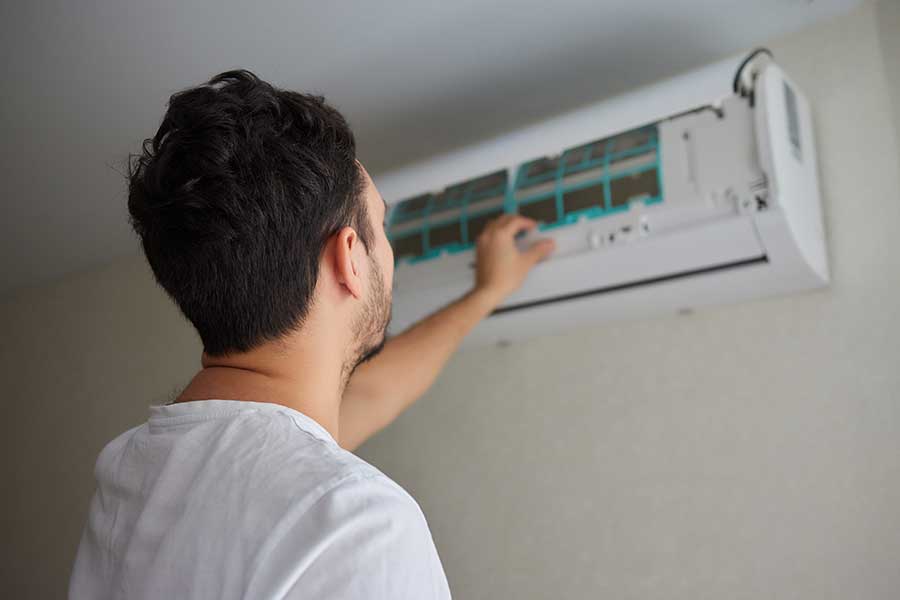
The air filter plays a crucial role in your AC’s performance, so inspecting it regularly is essential.
A clean filter helps maintain peak airflow, improves energy efficiency, and keeps your indoor air quality high. If it’s clogged with dust and debris, your system has to work harder, leading to higher energy bills and potential breakdowns.
You should check your air filter at least once a month, especially during peak usage seasons. If you notice it’s dirty or discolored, replace it with a new one.
Depending on your filter type, some can be rinsed and reused, while others need replacing. Regularly replacing your air filter enhances air quality and efficiency, ensuring your system runs smoothly.
Clear the Condenser Unit
Clearing the condenser unit is essential for peak AC performance. Debris like leaves, dirt, and grass clippings accumulate around the unit, restricting airflow and hindering efficiency.
To start, turn off the unit’s power to guarantee safety. Then, clear away any visible debris from the exterior. Use a soft brush or a vacuum to remove dirt from the fins and coils, being careful not to bend them. A gentle rinse with a garden hose can help if you notice any stubborn grime. Just avoid using a pressure washer, as it can cause damage.
Once you’ve cleaned the exterior, check the surrounding area to verify at least two feet of clearance for ideal airflow. Regularly maintaining your condenser unit will improve efficiency and extend the lifespan of your AC system, keeping your home cool when you need it most. Additionally, ensuring proper air conditioning repair in Richmond Hill GA is vital for maximizing system performance immediately.
Examine the Ductwork
While you might focus on the AC unit, examining the ductwork is just as essential for maintaining ideal cooling efficiency. Start by checking for any visible damage or disconnected sections. Loose or torn ducts can lead to significant air leaks, wasting energy and diminishing your system’s performance.
Next, verify that all vents are unobstructed. Furniture, curtains, or other items can block airflow, making your AC work harder.
You should also inspect the ducts for dust and debris buildup, as this can restrict airflow and reduce indoor air quality. If you notice any issues, consider reaching out to a professional. Proper ductwork enhances cooling efficiency and contributes to a healthier home environment, as ductwork problems can lead to uneven temperatures and musty smells.
Listen for Unusual Noises
As you assess your AC system, pay attention to any unusual noises it might make. These sounds can signal underlying issues.
If you hear a rattling noise, it could indicate loose components or debris within the unit. A high-pitched squeal might suggest a worn-out belt, while a hissing sound could mean a refrigerant leak. Don’t ignore these alerts; if left unaddressed, they can lead to bigger problems.
Listen closely when your unit starts up and during operation. If you notice anything unusual, it’s best to contact a professional.
Georgia Air’s NATE-certified technicians can diagnose the problem accurately and provide efficient repairs. Remember, addressing issues early can save you from costly repairs down the line and keep your home comfortable.
Trust your instincts—it’s worth investigating if something doesn’t sound right!
Conclusion
Following these five quick tips, you can keep your AC running like a well-oiled machine. Imagine entering your home on a sweltering summer day, greeted by revitalizing cool air. A simple check of your thermostat, a clean air filter, and a tidy condenser can make all the difference. So, take a moment to verify your system is in top shape, and enjoy that crisp, comfortable oasis you’ve created in your Richmond Hill home.