

Imagine the cool, refreshing breeze of an efficiently running air conditioner on a sweltering summer day. To achieve that, you must properly fill Freon in your AC unit. You’ll start by gathering tools like a manifold gauge set and refrigerant scale, ensuring you have the right gear to stay safe. Next, you’ll find the low-pressure service port and check the existing Freon levels. But how do you release the Freon correctly and monitor the pressure levels to maintain efficiency? Let’s explore the essential steps together.
Why Is My AC Low on Freon?
Before diving into how to fill Freon in your AC, it’s important to understand why it’s low. Unlike motor oil or fuel, refrigerant doesn’t get consumed — a properly sealed AC system holds its Freon charge for its entire lifespan.
If your system is low, a refrigerant leak is almost always the root cause. Common causes include:
- Corroded or damaged copper refrigerant lines
- Worn Schrader valve cores at the service ports
- Loose fittings at the evaporator or condenser coil
- Physical damage to the outdoor compressor unit
Recharging without first finding and fixing the leak is only a temporary fix. If you suspect a leak, contact our HVAC team for a full system inspection before proceeding with a recharge.
Signs Your AC Is Low on Freon
Not sure if low refrigerant is actually your problem? Watch for these warning signs before reaching for a Freon canister:
- Warm or lukewarm air blowing from vents even at the lowest thermostat setting
- Ice forming on the refrigerant lines or evaporator coil
- Higher-than-normal energy bills — an undercharged system works harder to reach your set temperature
- Hissing or bubbling sounds near the refrigerant lines, indicating an active leak
- Longer cooling cycles that never fully bring the room to the target temperature
According to the U.S. Department of Energy, an AC system low on refrigerant can lose up to 20% of its cooling efficiency — significantly increasing your energy costs over time.
Gather Necessary Tools
To fill Freon in your AC, you must gather essential tools before starting. Using the wrong equipment — or skipping the refrigerant scale — is one of the most common causes of overcharging and compressor damage.
Here’s what you’ll need:
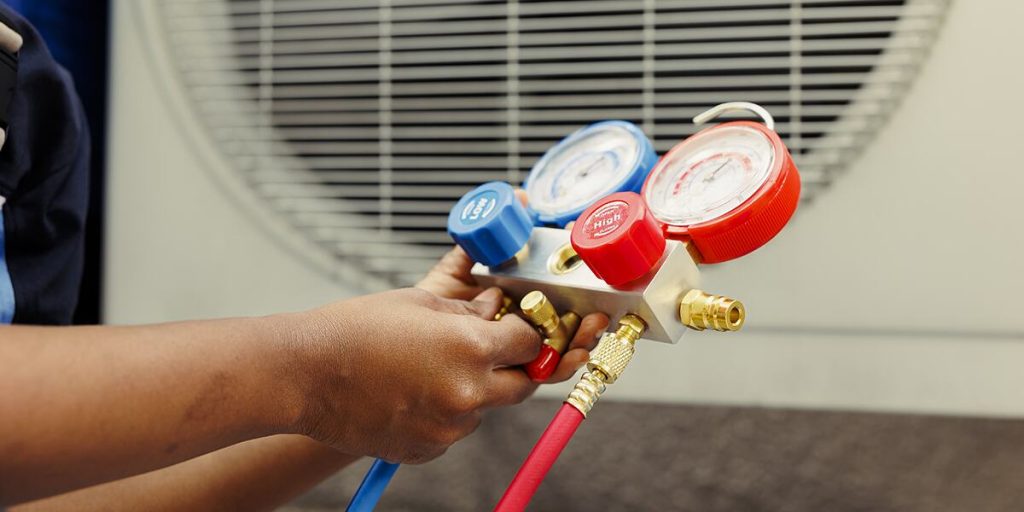
Manifold gauge set — measures high- and low-side refrigerant pressure; essential for accurate charging. This tool consists of high and low-pressure gauges, hoses, and connectors that interface with your AC system’s service ports.
Refrigerant scale — measures the precise amount of Freon being added, preventing overcharging or undercharging, both of which can lead to system inefficiencies or failures.
Refrigerant canister — must match your AC unit’s exact specifications; using the wrong type can cause severe damage.
Digital thermometer — beneficial for monitoring the system’s temperature before and after adding Freon, ensuring optimal performance.
Ensure Proper Safety Gear
Before proceeding with filling Freon, ensure you’re equipped with proper safety gear, including gloves, safety goggles, and a face mask to protect against refrigerant exposure and potential chemical burns. Freon is a hazardous substance, and direct contact can cause serious harm. Nitrile gloves are recommended over latex as they offer better chemical resistance.
Safety goggles are non-negotiable. They shield your eyes from any accidental splashes or gas exposure. Your face mask should be rated for chemical protection, ideally an N95 or higher, to filter out harmful fumes.
Additionally, wear long sleeves and pants to cover any exposed skin. The importance of a well-ventilated workspace can’t be overstated. Freon exposure in confined spaces can lead to dizziness, headaches, or even more severe respiratory issues. Ensure there’s adequate airflow by using fans or working outside if possible. Always have a first aid kit nearby, and familiarize yourself with emergency procedures for refrigerant exposure.
Locate the AC Service Port
You’ll need to locate the AC service port, typically found on the larger of the two refrigerant lines, known as the low-pressure line. This line runs from the evaporator coil inside your home to the compressor unit outside. The low-pressure line is often insulated and thicker than the high-pressure line, making it easier to identify.
First, ensure the AC unit is off and completely de-energized to find the service port and avoid electrical hazards. Next, visually inspect the low-pressure line for a port with a plastic cap, usually marked with an “L” or the word “Low.” Remove the cap to reveal the Schrader valve, which resembles a bicycle tire valve.
It’s crucial to avoid confusing the low-pressure service port with the high-pressure port on the narrower line. The high-pressure line’s port is unsuitable for adding Freon and could lead to dangerous over-pressurization.
Check Current Freon Levels
To ensure system function, connect a set of manifold gauges to the low-pressure service port to check the current Freon levels. Ensure the AC unit is powered off before attaching the gauges. Securely fasten the blue hose to the low-pressure port, typically found on the larger of the two lines from the compressor.
Once connected, power on the AC system and set it to the coldest setting. Allow the system to run for a few minutes to stabilize the pressure readings. Observe the readings on the manifold gauge:
Normal low-side pressure: 25–45 psi
Below 25 psi: Freon level is likely low
Above 45 psi: System may be overcharged
Connect the Freon Canister
After verifying low Freon levels, attach the yellow hose from the manifold gauge set to the Freon canister’s valve, ensuring a secure and leak-free connection. Before proceeding, double-check all connections for tightness to prevent any accidental Freon release, which can be hazardous.
Position the Freon canister upright and stable on a flat surface to avoid tipping. Confirm that the manifold gauge valves are in the closed position. This step is critical for maintaining system integrity and safety.
Use a wrench to tighten the yellow hose’s fittings, ensuring there’s no room for leaks. A snug fit is essential for a safe and efficient transfer of Freon. Next, inspect the canister for any signs of damage or corrosion that could compromise safety. Operating within a well-ventilated area is crucial to prevent inhaling any potential Freon fumes.
Release Freon Into the AC System
Open the low-pressure valve on the manifold gauge set slowly to allow Freon to begin flowing into the AC system. Ensure you observe the gauge readings closely as the refrigerant exits the system. Maintaining a controlled flow rate is crucial to avoid overcharging, which can damage the compressor or other components. Always wear safety goggles and gloves to protect yourself from potential refrigerant burns or inhalation hazards. Remember, the refrigerant is under high pressure and can cause serious injury if mishandled.
Ensure the AC unit is running during this process; the compressor needs to be operational to draw the Freon into the system correctly. As you release Freon, observe the ambient temperature and correlate it with the appropriate pressure readings. This ensures the system is charged accurately without causing harm or inefficiency. Keep the refrigerant canister upright to prevent liquid refrigerant from entering the system, which could cause pressure spikes. If the canister gets cold and frosty, wrap it in a warm cloth to maintain a steady flow rate.
Monitor Pressure Levels
Closely monitoring the pressure levels on your manifold gauges is vital to ensure the AC system is charged correctly. As you add Freon, keep a close eye on both gauges:
- Low-pressure side: 25–45 psi
- High-pressure side: 200–250 psi
Always refer to the specific manufacturer’s specifications for accurate readings. Misreading the pressure can result in an overcharged or undercharged system, leading to inefficiency or damage. Make frequent checks during the charging process to avoid any abrupt changes in pressure, which may indicate a problem. Wear safety gloves and goggles when working with refrigerants, as they can be hazardous. Ensure the connections on your manifold set are secure and leak-free. Any leaks can skew your readings and pose safety risks.
Test the AC System
Once you’ve confirmed that the pressure levels are within the specified range, start the AC unit to verify that the system is cooling effectively. Engage the thermostat, setting it to a temperature lower than the current room temperature to prompt the unit to activate. Allow the system to run for several minutes so it can stabilize.
Next, check the air temperature at the supply vents using a thermometer. You should see a temperature drop of 15–20°F compared to the return air temperature — this differential is your real-world confirmation of efficient cooling performance.
Also, listen for any unusual noises, such as hissing or rattling, which might signal a refrigerant leak or mechanical issue. Inspect the evaporator and condenser coils for frost or ice buildup, which could indicate overcharging or airflow problems. Ensure the condenser fan and blower motor operate smoothly without obstructions or excessive vibration.
If the temperature differential is less than 15°F after a proper recharge, there may be a secondary issue at play. Reach out to our HVAC team for a full system diagnostic.
Key Takeaways
Properly filling Freon in your AC isn’t just about topping up refrigerant — it’s about diagnosing the root cause, using the right tools, and keeping your system safe and efficient for the long haul.
- Did you know? Improper Freon levels can reduce AC efficiency by up to 20%, according to the U.S. Department of Energy.
- Always use a manifold gauge set and refrigerant scale — precision prevents overcharging and compressor damage.
- Low Freon almost always means a leak. Recharging without fixing the leak is a temporary fix at best.
- Target a 15–20°F temperature differential at the supply vents as your real-world performance benchmark.
- New systems installed in 2025 or later use low-GWP refrigerants like R-32 or R-454B per the EPA’s AIM Act — confirm your refrigerant type before purchasing any canister.
- When in doubt, hire a certified HVAC professional. The cost of a service call is far less than a failed compressor.
Frequently Asked Questions
How Often Should I Refill Freon in My AC Unit?
Freon shouldn’t need to be refilled regularly. If your AC requires frequent refills, there’s likely a leak. Always follow EPA guidelines and use proper PPE to ensure safety when handling refrigerants. Prioritize servicing others with diligence.
What Are the Signs That My AC Is Low on Freon?
You’ll notice diminished cooling efficiency, ice formation on refrigerant lines, and unusually high energy bills. Additionally, listen for hissing sounds indicating leaks. Addressing these signs promptly ensures optimal performance and prevents potential damage to the AC system.
Is It Legal to Refill Freon Myself, or Do I Need a Professional?
Due to strict EPA regulations, you can’t legally refill Freon yourself; it requires certified professionals. Mishandling refrigerants can pose safety hazards and environmental risks. Always consult a licensed HVAC technician for such tasks to ensure compliance.
What Are the Environmental Impacts of Improperly Handling Freon?
Improper handling of Freon can devastate the ozone layer, turning our skies into a wasteland. To prevent environmental damage and safeguard public health, it’s crucial you adhere to EPA regulations and use proper recovery equipment.
Normal low-side pressure: 25–45 psi
Below 25 psi: Freon level is likely low
Manifold gauge set — measures high- and low-side refrigerant pressure; essential for accurate charging. This tool consists of high and low-pressure gauges, hoses, and connectors that interface with your AC system’s service ports.
Refrigerant scale — measures the precise amount of Freon being added, preventing overcharging or undercharging, both of which can lead to system inefficiencies or failures.
Refrigerant canister — must match your AC unit’s exact specifications; using the wrong type can cause severe damage.