
Refrigerant is the single most important cooling product in your air conditioner or heat pump. Although your HVAC system would remain on, it would blow uncomfortable warm air without it. In 2025, however, this vital component is getting an upgrade.
What is the new refrigerant for 2025? Below, our team at Georgia Air Cooling & Heating delves further into how refrigerant works and how new mandates have made the most recent type a must for all units.
What Is the Role of Refrigerant in Savannah, GA, Cooling Units?
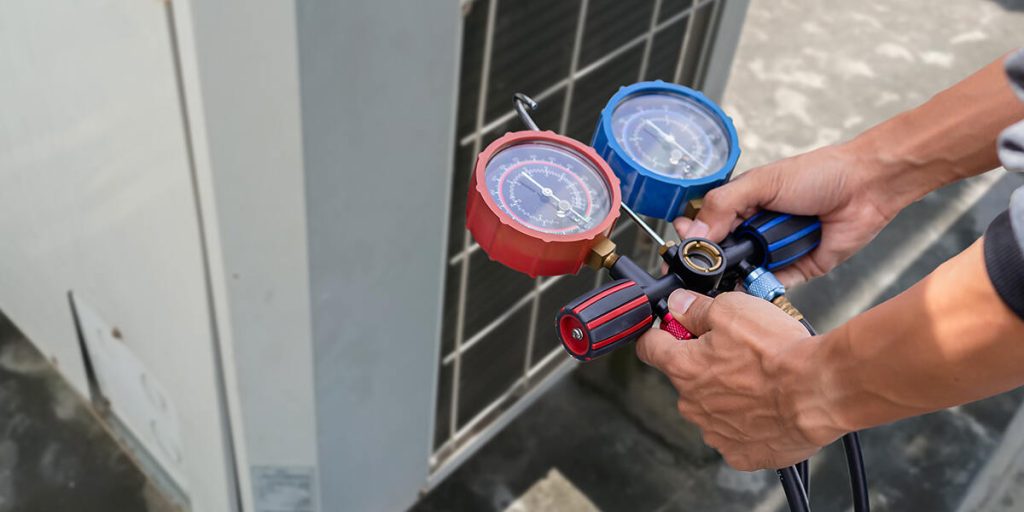
What is the reason for this coolant in the first place? When air conditioners first turn on, the air handlers pull warm household air into the system through the air vents. Simultaneously, the compressor (which resides in the outdoor condenser compartment) pumps liquid refrigerant through the indoor evaporator coil.
When the warm air passes over the coil, the refrigerant within it absorbs the heat, leaving only cool air behind. The refrigerant then rises in temperature, evaporating into a gas that the compressor forces into the outdoor compartment’s condenser coil. Once there, the compressor pressurizes the refrigerant so that it releases the warm air outside your Savannah, GA, home and reverts into a liquid.
Finally, the liquid coolant returns to the indoor evaporator coil, where the cycle repeats until your indoor temperature matches your thermostat setting and the air conditioner powers off. Therefore, without the coolant absorbing and expelling hot household air, the air would travel into and out of the unit without conditioning. In turn, your home would remain warm while the system burns electricity.
Why Is There a Need for New Refrigerant in 2025?
What is the new refrigerant for 2025, and why is it replacing the existing type? The Environmental Protection Agency is now mandating that all HVAC technicians and manufacturers use R-454B and R-32 starting January 1, 2025, in place of the current R-410A type. That’s because the EPA believes the latter contributes to global warming as it releases greenhouse gases into the atmosphere.
Therefore, in an attempt to reduce the environmental impact, the EPA is demanding an immediate change. That means all new cooling units (including your Savannah, GA, one) must carry the new refrigerant type, and older ones can no longer receive refrigerant recharges during repairs if they run on R-410A.
Other approved refrigerant alternatives that comply with EPA regulations include the following:
- Hydrofluoroolefins (or HFOs) are fourth-generation fluorine-based gases classified as organic compounds with a lower Global Warming Potential (GWP) than traditional refrigerants of the past.
- Hydrochlorofluorocarbons (or HCFCs) are chemicals with hydrogen, carbon, chlorine, and fluorine atoms. While they’re greenhouse gases that the EPA is slowly phasing out (like R-410A), they have a shorter atmospheric lifespan, meaning they’re a preferred alternative to CFCs. Similarly, a hydrofluorocarbons (HFC) phasedown is in effect.
- Natural refrigerants use substances naturally found in the environment, like hydrocarbons, ammonia, or carbon dioxide. That makes them sustainable alternatives with a low GWP, which in turn means they’re a better option than some of the synthetic counterparts mentioned above.
The EPA’s Phasing Out Timeline and What You Should Know
However, understanding the answer to, “What is the new refrigerant for 2025?” isn’t everything. Just as important is the EPA’s timeline, which explains how this phase-out will work and what you should expect, especially if your current Savannah, GA, unit runs on an older type of refrigerant.
Whenever the EPA does a phase-out, they try to make it as smooth and effortless a transition for everyone, from the manufacturers, distributors, and HVAC companies to the users. That’s why the EPA 2025 mandate plans to span five years, starting in 2025 with a complete phase-out of all coolants with a 2,200 GWP rating and higher.
They expect this portion of the phase-out to take roughly three years before they can move on to the second step. Starting in 2028, the EPA plans to further restrict refrigerants by again lowering the GWP rating, this time to 1,500. Finally, by 2030, the GWP rating of all HVAC systems and their refrigerant types should be no higher than 750, almost one-third of the current limit.
How Savannah, GA, Residents Are Preparing for the New 2025 Refrigerant and EPA Mandates
So, now you know the answer to, “What is the new refrigerant for 2025?” and the EPA’s plan on phasing it in. But what can you do to prepare for the change?
The first step in making a change is understanding what kind of refrigerant your unit uses to produce your cooler indoor controlled climate. Your air conditioner’s owner manual or the manufacturer’s website should tell you, but it’s best to schedule an assessment or AC service in Savannah GA, with a local and reputable HVAC team.
Technicians not only relay the refrigerant type but also whether you would need an upgrade or replacement. They’ll develop a plan to minimize disruptions in your household while complying with new EPA regulations. If you need a system upgrade, plan and budget ahead of time and stay updated with the latest industry and EPA rules so you’ll always be aware of recent changes and best practices.
The Benefits of Swapping Your Savannah, GA, Unit for a More Environmentally Friendly Refrigerant
It’s understandable that most Savannah, GA, residents are more concerned with the southern heat waves than with wondering, “What is the new refrigerant for 2025?” which could lead to tossing a perfectly good AC unit. After all, U.S. News & World Report claims that Georgia is rated the sixth hottest state nationwide with an average maximum temperature of 77 degrees.
In Savannah especially, our neighbors notice the temperature starts heating up as we step into May’s 84-degree highs, which eventually leads to scorching July and August months with midday temperatures that regularly remain in the low 90s. So, if your air conditioner does its job by helping to keep you cool when it matters most, why change anything?
For some residents, becoming more environmentally aware and considerate is enough to make a change to these new refrigerants with an A2L classification. But if you need more of an incentive, consider the following benefits.
Long-Term Cost-Effectiveness
Replacing or modifying your current unit so that it uses the new refrigerant can leave you with high upfront costs, especially with the up to 30% increase in AC unit equipment prices. That leaves most residents reluctant to make the switch. However, if you’ve had your unit for 10 or more years, it likely has a reduced cooling capacity and energy efficiency ratio that leaves you with higher energy bills.
So, if you upgrade, your Savannah system could end up paying for itself in the long run while making a smaller environmental impact.
Successful Repairs With Compatible Parts
New refrigerant means new parts. This means that, if you keep your old unit, your HVAC contractor may struggle to actually repair it.
For instance, if you keep your current unit (which likely circulates R-410A coolant) and a leak in the coils leaves you needing a recharge, a technician cannot do the job. Not only will it not comply with EPA regulations, but the product will be discontinued.
Rather than taking the time to plan for this large investment, you’ll have no other option but to dish out the money for a replacement unit on the spot. So, to always ensure you can find compatible parts for successful repairs, upgrade to a unit that takes a refrigerant with a flammability class 2L, like R-454B and R-32.
Compliance With Government Regulations
Finally, there are consequences of not complying with government and EPA regulations. While Savannah, GA, residents don’t have to worry about getting into legal trouble for owning a system that still takes an older refrigerant, HVAC companies do. They can receive fines if their practices don’t align with the new rules, so they likely won’t service or provide systems with old refrigerant.
However, if you do switch your unit for more eco-friendly refrigerant alternatives and a higher SEER rating you can receive government incentives like tax credits, home efficiency rebates, and more.
If You Can’t Trust Your Savannah, GA, Neighbors, Who Can You Trust?
The refrigerant change can mean big improvements for the environmental-friendliness of the HVAC industry. Not only that, but homeowners and business owners alike can benefit from some of the changes.
That said, implementing the change may provide challenges for the average individual. Trading up your air conditioner or upgrading your current one so it takes better refrigerant is a big and daunting task. You need a trustworthy team by your side known for its honesty, reliability, and care. That’s why you should reach out to us.
At Georgia Air Cooling & Heating, our local Savannah team with dozens of five-star Google reviews is hand-picked, each technician embodying the experience and professionalism you deserve. So, whatever your questions, from, “What is the new refrigerant for 2025?” to, “Why is my AC compressor overheating and shutting off?” call for answers and services today!