
It can be frustrating when your AC stops cooling in Richmond Hill, GA. Start by checking the thermostat settings to verify it’s in the right mode. Next, look at the air filter—clogs can affect performance. Don’t forget to inspect the outdoor unit for debris blocking airflow. There are a few more things to consider before calling a professional, and you’ll want to know how to tackle them effectively.
Check the Thermostat Settings
Have you checked your thermostat settings? This simple step can often make a big difference when your AC isn’t cooling.
First, verify your thermostat is set to “cool” mode. If it’s on “off” or “heat,” your system won’t kick in to lower the temperature. Next, double-check the temperature setting. If it’s higher than the current room temperature, the AC won’t activate.
Also, make certain the thermostat is functioning correctly. If it’s not responding, try replacing or resetting the batteries to factory settings. Sometimes, a slight adjustment can resolve the issue.
Finally, if you have a programmable or smart thermostat, confirm your cooling schedule is set up correctly. A misprogrammed schedule can lead to unexpected temperature changes.
Additionally, ensure that you have access to expert air conditioning services, which can help diagnose more complex issues if the problem persists.
Once you’ve confirmed these settings, your AC should be back on track to keep you cool and comfortable.
Inspect the Air Filter
A clogged air filter can considerably hinder your AC’s performance, so it’s essential to inspect it regularly.
If your AC struggles to cool your home, the air filter might be the culprit. Dust, dirt, and allergens build up over time, obstructing airflow and forcing your system to work harder. This affects cooling efficiency and can lead to higher energy bills.
To check the filter, locate it within your AC unit—usually near the blower. Remove the filter and hold it up to the light. If you can’t see through it, it’s time for a replacement.
Aim to change your filter every one to three months, especially during peak usage seasons. Keeping a clean air filter enhances your comfort and prolongs your AC’s lifespan. Regular maintenance is crucial for increasing operational efficiency, ensuring your system runs smoothly when needed.
Examine the Outdoor Unit
The outdoor unit is essential to your AC’s overall performance, so it’s important to examine it when cooling issues arise.
Start by checking for any debris or obstructions around the unit. Leaves, dirt, or even furniture can block airflow, reducing efficiency.
Next, inspect the condenser fins; they should be straight and clean. You can gently straighten them with a fin tool or a flathead screwdriver if they’re bent.
Also, check the base of the unit for pooling water, which could indicate drainage problems.
Verify the unit’s power supply is on and the circuit breaker hasn’t tripped.
Finally, listen for unusual noises, like rattling or buzzing, as these could signal a mechanical issue. Maintaining good indoor air quality is vital for your health, so addressing AC issues promptly is essential.
Look for Refrigerant Leaks
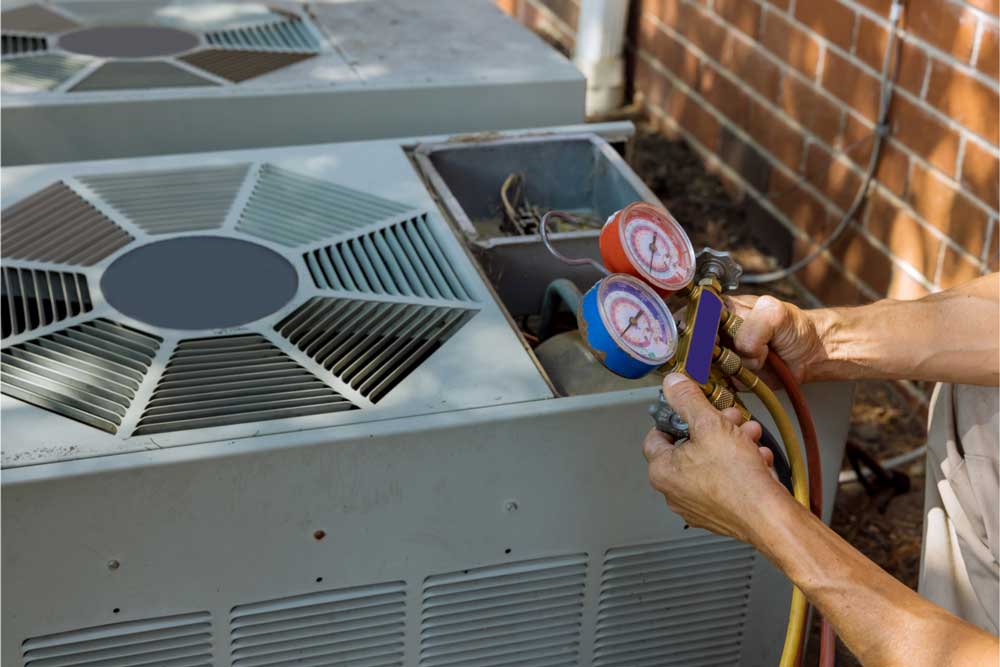
Checking for refrigerant leaks is vital when your AC stops cooling effectively. Low refrigerant levels often indicate a leak, reducing cooling efficiency and resulting in higher energy bills.
Start by inspecting the copper lines connected to your outdoor unit. Look for signs of oil residue, which can indicate a leak. You might also notice frost forming on the lines or the evaporator coil, suggesting a refrigerant issue. If you see any of these signs, it’s essential not to delay. Leaks can worsen over time, causing more significant damage to your system.
While you can check for visible signs, pinpointing the exact location of a leak often requires professional tools and expertise. Addressing refrigerant leaks promptly guarantees your AC runs efficiently, keeping your home comfortable during those hot Georgia summers.
Contact a qualified technician to perform a thorough leak detection and ac repair service.
Review Electrical Connections
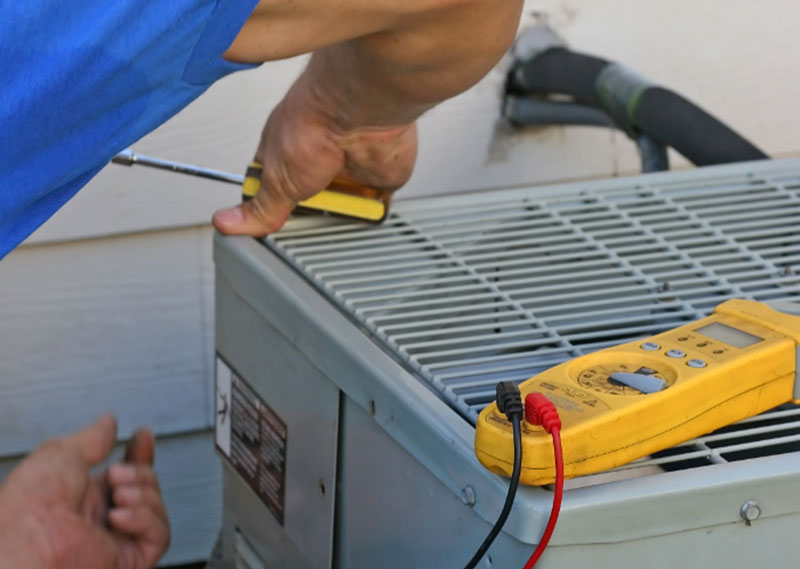
Reviewing electrical connections can be essential in diagnosing the issue when your AC stops cooling. Faulty connections can disrupt power flow and affect performance.
Here’s what you should check:
- Circuit Breaker: Verify the breaker hasn’t tripped. Reset it if necessary.
- Wiring: Inspect the wiring for any signs of damage, such as fraying or burns.
- Terminals: Check all terminal connections for tightness; loose connections can lead to inefficiency.
- Capacitor: Look for a swollen or leaking capacitor, which might need replacement for ideal operation.
If you discover any issues, it’s best to call a professional, like the experts at Georgia Air, to guarantee safe and effective repairs.
Proper electrical connections are vital for your AC system’s reliability and efficiency, so don’t overlook this step!
Conclusion
Don’t let a muggy day turn into a sauna! If your AC stops cooling, you’ve got the power to take action. You can become the hero of your comfort saga by checking the thermostat settings, inspecting the air filter, and examining the outdoor unit. But if those sneaky refrigerant leaks or electrical gremlins still haunt you, it might be time to call in the pros. Stay cool, calm, and collected—you’ve got this!