The dryer vent in an established home has usually been through a few dryers, a few owners, and a lot of laundry. Georgia Air Conditioning & Heating Repair provides dryer vent cleaning in Georgetown that clears years of accumulated lint and takes a close look at the duct material itself, since older installations do not always meet today’s safety expectations.
Our technicians clean the transition duct, the main run, and the exterior hood, then verify strong airflow at the outside. If anything along the line looks outdated or damaged, we tell you plainly so you can decide what to do next.
Clogged vent symptoms can look different depending on the time of year, which is one reason they are easy to dismiss.
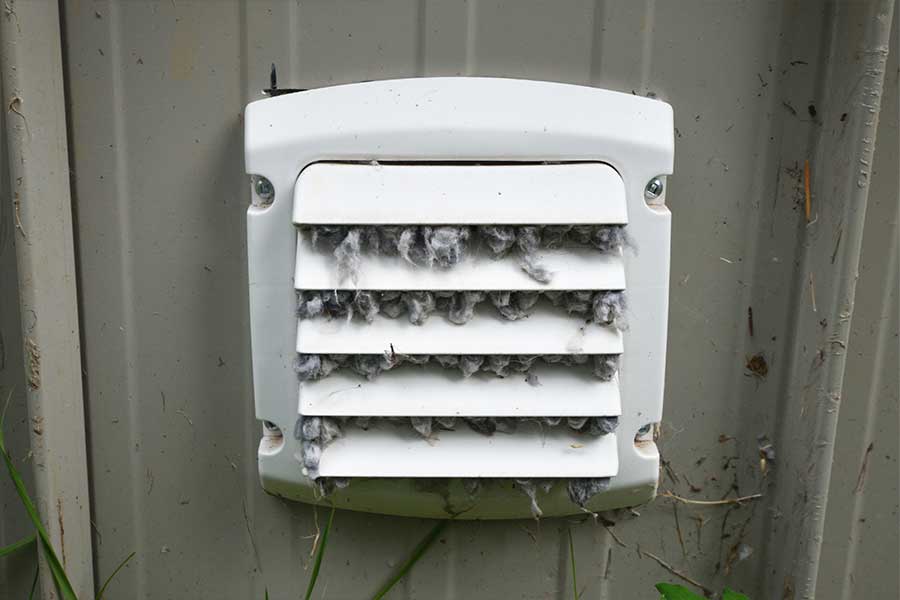
In summer, a restricted vent shows up as a laundry room that feels like a sauna and clothes that come out warm but clammy. In spring, pollen and debris can collect on the exterior flap, so watch for a hood that stays shut while the dryer runs. In the cooler months, you may notice heavier items like comforters and sweatshirts needing a second or third cycle, or a hot, dusty smell when the dryer starts up.
If any of these patterns sound familiar, regardless of the season, the vent is worth having cleaned and inspected.
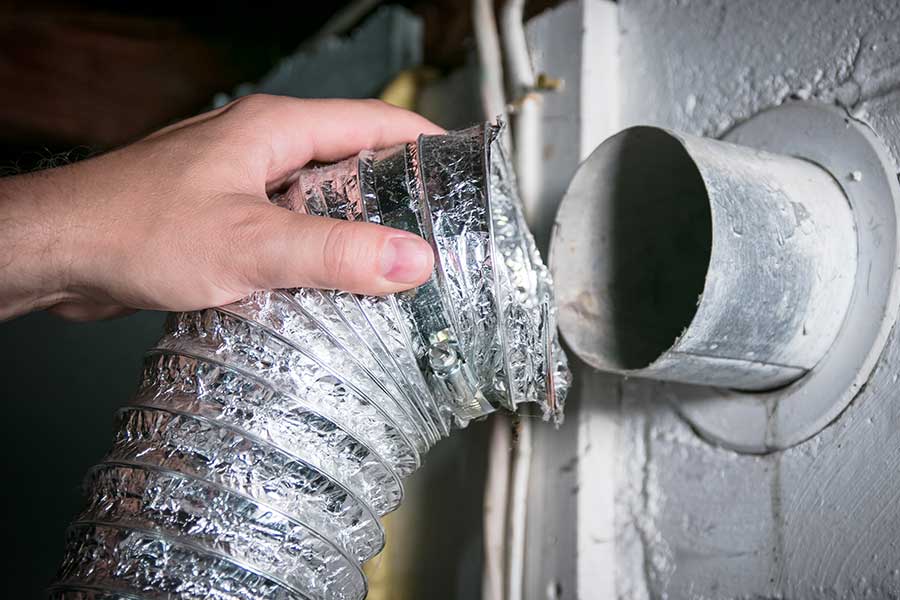
The type of duct behind your dryer has a lot to do with how dangerous a blockage becomes. Rigid or semi-rigid metal duct holds its shape and can contain heat. Thin plastic or vinyl duct, which was common in older installations, can sag, trap lint in its ridges, and melt or burn if lint inside it ignites.
Beyond fire, a blocked vent forces moisture back into the home, where it can encourage mildew in the laundry room and inside nearby walls. If you have a gas dryer, restricted exhaust can also allow carbon monoxide to linger indoors, so pairing a clear vent with working detectors is a simple, important safeguard.

A professional cleaning restores airflow, but it also gives you a full picture of your vent’s condition. During each Georgetown visit, we pay close attention to the following:
When the job is done, your dryer runs cooler and finishes loads faster, and you know exactly what shape the vent is in.
Many Georgetown homes have been standing for decades, and the dryer vents in some of them still rely on the white plastic or vinyl flexible duct that was once common in residential installs. That material is no longer considered safe for dryer exhaust. Its ribbed interior catches lint quickly, it sags into low spots where lint and moisture collect, and it offers little resistance if lint inside it catches fire. In the humid coastal climate, lint in those sagging sections stays damp and builds up even faster.
We encounter these older setups in established neighborhoods off King George Boulevard and in homes near Highway 204, particularly where a dryer has been replaced but the original duct was simply reattached. In some cases, plastic duct runs through a closet wall or crawl space where the homeowner has never seen it.
When we find plastic or vinyl duct, we clean what we can, show you the material and its condition, and explain why it should be replaced with metal duct. We also check the rest of the run for sagging sections and loose joints so you have a complete picture of what needs attention.
Honest answers matter most when you are dealing with something hidden inside your walls. Georgia Air Conditioning & Heating Repair has earned a 4.9-star Google rating from more than 1,050 reviews, with homeowners often pointing to technicians who explain what they found.
We bring that transparency to every dryer vent cleaning in Georgetown, along with the airflow experience our team uses daily on heating and cooling systems. Call us to schedule your cleaning.