

It’s a rare cold day in Georgia, and you’re walking back and forth to the thermostat, trying to inspire your furnace to stay on for more than five minutes. Your adjustments offer little reprieve from the growing indoor chill, though. As you wonder about the erratic cycling, you think, “Why does my furnace keep kicking on and off?”
Georgia Air might have your answer – and a furnace solution.
As preferred furnace repair services in Hinesville, GA, we see and repair short cycling all the time. If you’re local, we can have your heat working flawlessly in no time. For now, read on to see why your furnace keeps cycling and how to remedy it.
What Is Short Cycling?
Short cycling describes a furnace not operating for its full cycle length. A typical cycle in a furnace shouldn’t be shorter than ten minutes.
You’ll also notice that the furnace starts, stops, and then starts again within a short period. As it isn’t running for long, a short-cycling furnace will struggle to meet your temperature demands indoors.
Why might a furnace kick on and off in an endless series of short, ineffective cycles? We explore some of the reasons below.
Why Does My Furnace Keep Kicking On and Off?
Short cycling almost always indicates a furnace size problem.
If a technician installs a furnace that is too big for the building, it will operate in short, sudden bursts. This is because the furnace is too powerful for the space it heats and better equipped to warm big areas. It doesn’t take long for the furnace to reach the thermostat’s temperature setting, but as it switches off early, the heat won’t distribute evenly or at all.
Why does my furnace keep kicking on and off? If size isn’t the problem, we list numerous other potential causes below.
An Old, Dirty Air Filter
A dirty air filter prevents air from flowing freely through the vents.
Typically, the filter is beneath the return register, a vent that sucks in air from inside your house to recirculate it. The filter removes debris particles, like dust and dander, but, in doing its job, it gets dirty and starts to hamper airflow. Your furnace works much harder in turn.
Checking and replacing your air filter might stop the short-cycle issue.
Poorly Tuned Thermostat
Thermostats detect internal building temperatures and communicate with the furnaces about when to start and stop. Your thermostat might malfunction and trigger furnace short-cycling as a result. Why?
- Your temperature settings: Winter temperatures in Hinesville, Georgia, can dip into the 40s. If you set your thermostat above 70 degrees, the furnace might struggle to keep the building warm enough and start short-cycling as a result.
- Faulty wire connections: When you disturb loose wires, they temporarily disconnect. A disconnected thermostat can’t communicate consistently with the furnace. An HVAC technician will have to re-secure those wires.
- Lack of maintenance: Many HVAC maintenance services include thermostat calibration to ensure the sensors and wires work properly.
- Bad placement: If your thermostat is in an area that doesn’t reflect the overall building temperature, it might make your furnace start and stop constantly.
Indoor or Outdoor Vent Blockages
Like the air filter, your vent openings support free, consistent airflow. They can’t do their jobs properly if obstacles stand in their way or they develop blockages. Check the following vents:
- Exhaust vent: The exhaust vent is outdoors near your outside equipment. It’s usually a white, gray, or black metal or PVC pipe that faces upward.
- Air intake vent: The air intake vent looks similar to the exhaust vent but faces downward. It’s often right next to the exhaust pipe.
- Indoor vents: Each room in your home should have one or two grated vent openings.
Turn off your furnace and check the vents for noticeable, accessible blockages. If you see something out of your reach, contact an HVAC company in Hinesville, Georgia, about removing it.
Grimy Components
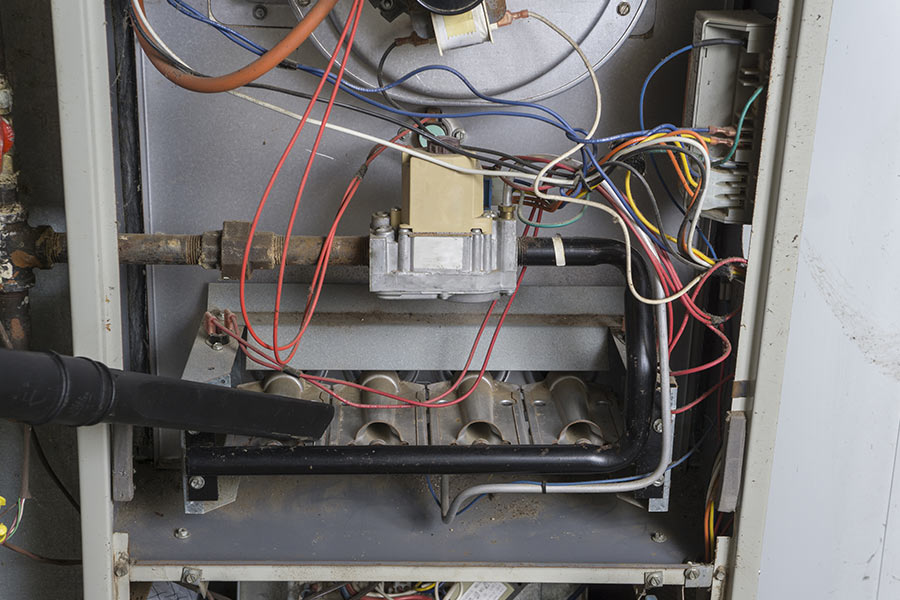
Some parts’ locations expose them to constant grime and filth. These problematic components may include:
- The flame sensor
- The pilot light
- The burners
- The heat exchanger fins
When the parts get dirty or ash-laden, the barrier may trigger short cycling. A routine maintenance service addresses this filth and returns your furnace operations to normal.
Malfunctioning Internal Parts
If the smaller parts aren’t the problem, then the bigger ones might be. For instance, a blower motor’s job involves sucking air in and blowing it out into the duct network, but that won’t work if there’s a malfunction. There’s also the high-limit switch, which detects dangerous heat levels and stops cycles to prevent your furnace from overheating.
Why does my furnace keep kicking on and off? If either the blower motor or limit switch develops an issue, don’t try to resolve it yourself. Trained technicians can clean and adjust delicate fan blades and electrical components safely and without damaging them.
How Can I Prevent Short Cycling for Future Winters in Hinesville, Georgia?
You can prevent future short-cycling issues with a little extra care and some close observation throughout the chilly winter months in Hinesville, Georgia. We share some maintenance recommendations below to help you protect your heating system for assured comfort this winter.
Keep Vents Open
We can’t stress enough the importance of free, open vents! Indoor and outdoor openings enable your furnace to cycle without unnecessary stress.
Add the following habits to your heating maintenance routine:
- Inspect and clean the exhaust and air intake vents.
- Remove and clean the indoor vent grates.
- Keep storage items and personal belongings away from indoor and outdoor vents.
Your furnace is less likely to overheat and trigger limit switch safety shut-offs this way.
Replace Your Air Filter Regularly
This one goes along with vent maintenance but deserves its own discussion. A filthy filter prevents the return register from drawing in the air. It also enables allergens and contaminants to repeatedly circulate the ducts and recontaminate your home or business.
Change the filter every three months or more for better indoor air quality.
Cleanliness Is Key
Tidiness means eliminating dust that could hinder your furnace’s performance. You might be able to wipe off the flame sensor and pilot light with a little know-how, but HVAC technicians should clean up any delicate parts and those that are more difficult to access. If you are unfamiliar or uncomfortable with the task, rather leave it up to your service provider to do it during their routine maintenance appointment.
Meanwhile, you may manage other furnace housekeeping aspects, such as:
- Tidying the outdoor unit. Leaves, twigs, and cut grass get stuck inside the protective unit grates or fall into the fan opening. Use a broom to gently sweep the debris off of and away from the outdoor unit.
- Checking your indoor air handler. Dust can gather on the indoor unit. You might also accidentally leave storage items too close to it. Periodically inspect it, wipe it down with a soft cloth, and move storage one or two feet away from it.
- Using additional air quality solutions. Georgia Air offers air purifiers and scrubbers to remove other particles that you might not know about. These devices keep the air breathable while protecting your whole HVAC system from grime buildup.
A little housekeeping also goes a long way. Regularly dust, sweep, and vacuum around your home or commercial space to keep the dust to a minimum for your furnace and HVAC.
Schedule Maintenance Tune-Ups
Finally, don’t forget to schedule your annual furnace tune-up every autumn. It’s best to secure your appointment before you start up the heating system.
If you’re local, why not join our PeachCare Club for twice-annual tune-ups, service discounts, and additional benefits in Georgia?
Georgia Air Helps Hinesville Residents Maintain Their Furnaces
Why does my furnace keep kicking on and off? We hope you now have a detailed and informative answer.
You can also contact Georgia Air about fixing furnace problems, including emergency and routine HVAC services in Hinesville, Georgia. Call us today or get in touch online!
Frequently Asked Questions
Furnace short cycling is a common problem that many people aren’t sure how to approach. Our crew dove into some common queries about this problem below.
Can Short Cycling Harm My Furnace?
Yes, short cycling can harm your furnace, especially if you let it go on. Short cycling indicates an internal issue, and if it continues, it will overuse the furnace’s components quickly.
How Much Does a Short-Cycling Furnace Fix Cost?
A fix for your short-cycling furnace can cost anywhere from $50 to over $500 (typically, it won’t run into the thousands).
How Long Should the Average Furnace Cycle Last?
The average furnace cycle should last ten to 20 minutes. The time frame depends on the system, the current room temperature, and the desired temperature setting.
Why Does My Furnace Keep Kicking On and Off Even After Repairs?
Your furnace might keep kicking on and off, even after repairs, because of an overlooked issue like a filthy filter or a vent obstruction. Are you still asking, “Why does my furnace keep kicking on and off?” You might consider replacing your furnace.