


Does your air conditioning refuse to cooperate just when you need it the most? You might have a jammed AC relay switch. This issue pops up more frequently than you might think, but the good news is that you can usually fix it yourself.
As the go-to crew for AC repair in Savannah, we at Georgia Air Cooling & Heating have helped many people restore their crisp, cool air and get their summer back on track. Keep reading for more insight!
What’s a Relay Switch Anyway?
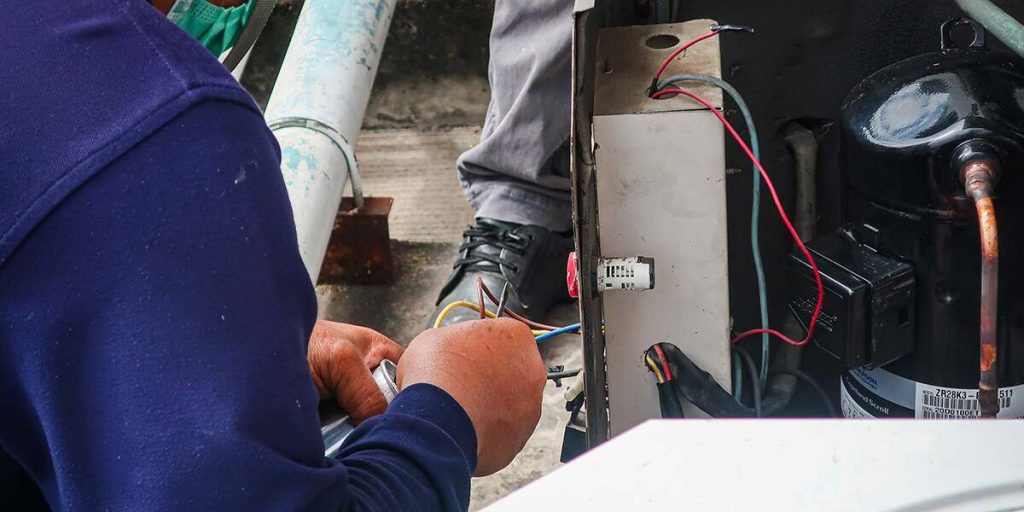
Relays open and close a device’s electrical circuits; they essentially help regulate the flow of power through more delicate components.
When activated, a relay creates a connection with one or more of its contacts. Shutting it off breaks those contacts and prevents electricity from reaching the circuit.
Look at almost any modern electronic appliance, and there’s a big chance it utilizes relays. They have many designs, but the ones you’ll find in your AC are electromechanical. This means they rely on mechanically movable and electromagnetic contacts to work.
How They Operate Inside Your Cooling System
Think of AC relays as traffic conductors. Whenever you change the temperature on your thermostat, it signals the relay to either let the power through to the compressor and fans or cut off the flow. It’s a behind-the-scenes dance that keeps your interiors comfortable without overloading the air conditioner.
Most modern ACs have multiple relays working together to direct power. Check your control board or schematic to locate the components in your specific unit. Knowing their position can make troubleshooting much simpler.
Do You Have Faulty Switches?
You might have a stuck relay switch if you notice these red flags.
An Unresponsive System
Is your AC refusing to budge no matter how much you adjust the thermostat? A jammed relay either perpetually allows electricity to flow or stops it altogether.
Your unit ends up in a constant state of limbo. The system might remain inactive even as the ambient temperature rises above your set point. It could also chug along endlessly without shutting off, which consumes energy and hastens internal wear.
Check first if the problem lies in your thermostat device. Replace its batteries and read the manufacturer’s guide to reset it when necessary. If it seems in good shape, it’s time to investigate the AC relay switch.
Unusual Sounds
Today’s AC models run remarkably quietly and often produce no more than a soft hum. If you hear anything else from your appliance, don’t ignore it.
Loud clicks might stem from faulty relays struggling to open or close. Buzzing suggests electrical issues while humming points to stuck or damaged relay contacts.
Treat these sounds seriously as early warning signs. We recommend refraining from using your indoor cooling until you identify and resolve the source.
Subpar Performance
Are some rooms in your Savannah abode inexplicably warmer than others? A faulty relay switch can disrupt the balance and lead to inconsistent cooling.
You may notice random hot spots or a general muggy feeling indoors. Check for uneven air distribution or vents blowing warm air when they should feel chilly.
You can verify it further by placing thermometers around your home and tracking temperature fluctuations.
Unpleasant Odors
Keep your nose alert for burnt or acrid smells near your unit. When the switch becomes stuck in the “on” position, the compressor and fans might receive a continuous flow of electricity. This pushes the system beyond its intended limits.
The unceasing operation won’t just hike up your energy bills; it also strains internal components and makes them overheat. Leaving this unchecked can damage internal parts.
The heat buildup within the unit may also create a fire hazard, but it’s fairly rare. Modern units have built-in safety features to prevent such incidents.
Fixing a Stuck AC Relay Switch in Savannah, GA

You don’t have to become an HVAC savant to bring back your unit’s performance. Follow these easy steps:
Gather Your Tools
You need a screwdriver set, wire strippers, pliers, and the replacement part. If you don’t know what type of relay switch your model uses, check the manual or reach out to the manufacturer. Preparing everything means you won’t need to pause midway to hunt for a missing tool.
You could also get a handy electrical tester, which will help you verify connections later on.
Cut Off the Power
Turn off your appliance completely before looking into the AC relay switch. Unplug it, or locate the circuit breaker specific to your air conditioner and switch it off.
Never skip this step. It helps guarantee your safety and protects the system from further damage. Handling an electrical component while it’s still live can lead to electric shocks or short circuits.
Double-check that the power has indeed shut down by attempting to turn on the unit one last time,it shouldn’t respond whatsoever.
Fix the Faulty Part
Replacing the relay switch will likely involve opening the access panel. If you have a centralized setup with an outdoor and indoor unit, you need to inspect both locations.
Most house a contractor relay inside the condenser and a blower fan relay in the air handler or furnace. Carefully take off the panel with your screwdriver to access the component. Gently pry it out and note how the wires connect to it; you might find it helpful to take a quick picture to reference later.
Firmly secure the replacement and reconnect the wires following the same configuration. Tightly secure each connection with the appropriate screws or clips.
Verify Operation
After closing the panel, turn the power back on at the circuit breaker or plug the unit back in. Test your fix by altering the thermostat settings and observing your cooling system.
Does it power on smoothly without unusual sounds or delays? Let it run for a few minutes to see that it cycles properly and maintains a consistent temperature. Confirm that all rooms receive even cooling and no odd odors are present.
Minimize Similar Headaches in the Future
The last thing you need is a sudden AC failure in the middle of a scorching summer in Savannah. Incorporate these fairly simple tips into your routine to keep your unit running smoothly.
Moderate Your Usage
Running your AC non-stop might keep you cool, but it also ramps up the risk of your relay switch overheating. Its materials may eventually fuse together and prevent it from functioning correctly.
You normally don’t have to worry about this issue; quality AC models from reputable manufacturers have built-in safety measures to handle continuous operation. It never hurts to give your system breaks, though.
Use fans or natural ventilation to reduce the load. Consider upgrading to a programmable thermostat too when you haven’t already. It optimizes cooling cycles by adjusting the temperature when you’re away or asleep.
Refresh the Outdoor Unit
The constant exposure to the elements makes your outdoor unit a prime candidate for dirt and debris buildup. It’s rare, but these contaminants could penetrate the system and make the AC relay switch sticky.
Keep the section clean by routinely checking and removing twigs, leaves, and other detritus. You should also trim any nearby vegetation and leave at least a 2-foot clearance around the unit.
This easy upkeep doesn’t just protect your AC relay switch; a clean unit also expels heat more effectively. This translates to lower energy consumption and prolonged system life.
Schedule Tune-Ups
The small steps you take can go a long way, but nothing replaces the expertise of professional technicians. Their exhaustive maintenance checklist includes:
- Inspecting and cleaning coils and fins for optimal airflow
- Checking and tightening electrical connections
- Lubricating moving parts to minimize friction
- Measuring refrigerant levels and recharging if necessary
- Cleaning the relay
- Calibrating thermostats to guarantee accurate temperature control
- Clearing drainage lines to avert water damage
- And more
You wouldn’t skip routine oil changes for your vehicle, right? Your indoor cooling deserves the same level of care. Annual or bi-annual checkups, often included in maintenance plans, help spot minor issues before they escalate into costly repairs.
What if It’s Another Issue Entirely?
With so many moving parts in your cooling system, narrowing down the culprit becomes a bit like detective work. You might have a different component causing trouble if you spot:
- Water pooling around your indoor unit
- Frequent cycling on and off without reaching the desired temperature
- Barely any airflow when you run your hands near the vents
- A sudden spike in your energy bills
- Moldy or musty odors
Dependable AC Troubleshooting and Repair Specialists in Savannah, GA
Identifying the root cause, getting the appropriate AC unit component, and the actual repair can feel overwhelming. Why not leave it Georgia Air Cooling & Heating instead?
Our proficient crew always has you covered. Many in Savannah enjoy comfortable indoor environments all year round thanks to us; we hope to prove our worth to you soon!
Dial 912-756-0506 and fix your AC relay switch,or read more of our blog and learn the risks of DIY AC installation work.