
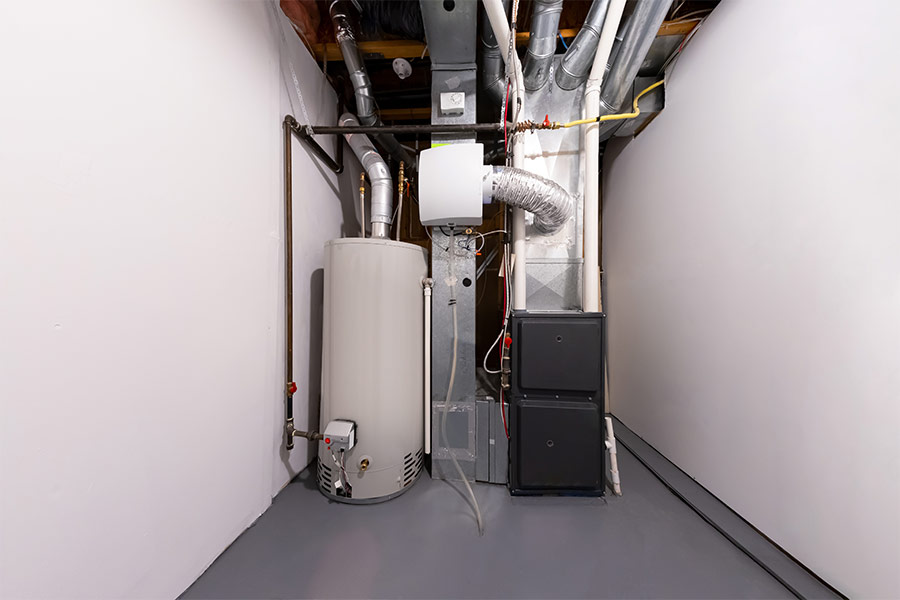
If your furnace is leaking water when the AC is on, you’re likely dealing with one of several common issues that can disrupt your home’s comfort. A clogged condensate drain could prevent proper drainage, while a faulty condensate pump might not remove excess water as it should. Dirty air filters can restrict airflow, leading to freezing in the evaporator coils and causing overflow. There’s also the possibility of improper installation or high humidity levels contributing to the problem. Want to pinpoint the exact cause? Let’s explore each potential culprit and how it might be affecting your system.
Clogged Condensate Drain
A clogged condensate drain in your furnace can cause water to leak by preventing proper drainage of condensation. When your air conditioning system is on, it generates condensation that needs to be drained away efficiently. If the condensate drain becomes clogged with dirt, algae, or debris, the water has nowhere to go, leading to a furnace leaking water when the AC is on.
To address this, you need to locate the condensate drain line, which is typically a PVC pipe connected to your furnace. Inspect the line for any visible obstructions. You can use a wet/dry vacuum to clear minor clogs. Attach the vacuum to the end of the drain line and turn it on for a few minutes. This should remove the blockage and allow water to flow freely again. Periodically flushing the drain line with a mixture of water and mild bleach can prevent algae buildup. Confirm that the drain pan, which collects the condensation, is also clean and free of debris. By keeping the condensate drain clear, you’ll prevent your furnace from leaking water and guarantee the efficient operation of your HVAC system, ultimately serving others by maintaining a comfortable environment.
Faulty Condensate Pump
When your condensate pump malfunctions, it can lead to water leakage by failing to effectively remove the accumulation of condensation from your furnace. This pump’s primary job is to transport the excess water generated by your AC unit to an appropriate drainage area. If it ceases to work, you’ll notice water pooling around your furnace, potentially causing damage.
First, check if the pump is receiving power. Inspect the electrical connections and verify the pump is plugged in securely. Next, examine the float switch, which activates the pump when water levels rise. A stuck or defective float switch can prevent the pump from engaging. Manually lift the float to see if the pump starts. If it doesn’t, the pump or switch needs replacement.
Dirty Air Filters
Dirty air filters obstruct airflow, causing your furnace to work harder and potentially leading to water leakage from excessive condensation. When the airflow is restricted, the evaporator coils can freeze due to inadequate warm air passing over them. Once the coils thaw, the accumulated ice turns into water, which may overwhelm the condensate drain system, resulting in leaks.
To prevent this, you need to regularly check and replace your furnace’s air filters. A clogged filter not only impacts the efficiency of your HVAC system but also heightens the risk of moisture build-up. Typically, you should change the filter every 1-3 months, depending on usage and the specific type of filter you have.
Improper Installation
Improper installation of your furnace can lead to water leakage by compromising the system’s ability to properly drain condensate, causing water to accumulate and overflow. When the furnace and AC components are not correctly aligned or securely fitted, it disrupts the flow of condensate from the evaporator coil to the drain pan. Consequently, condensate water can leak out of the system instead of being directed to the drain line.
One common installation issue is an incorrectly pitched drain line. If the drain line doesn’t have the right slope, water will not flow efficiently, leading to clogs and leaks. Additionally, improper sealing of ductwork can cause air leaks that alter pressure balances, inadvertently affecting how water drains. Moreover, if the condensate trap is not properly installed or is missing altogether, it can lead to water backups and overflow.
Frozen Evaporator Coil
A frozen evaporator coil can cause water to leak from your furnace by blocking the normal flow of refrigerant and creating excess condensation. When the coil freezes, it disrupts the balance within the system, causing water to overflow from the condensate pan. This happens because the ice buildup prevents the coil from absorbing heat properly, leading to a drop in temperature that causes the surrounding moisture to freeze. As the ice melts, it produces more water than the system’s drainage can handle, resulting in leaks.
To pinpoint this issue, you should check the airflow around the evaporator coil. Restricted airflow, often caused by clogged filters or blocked vents, can lead to coil freezing. Make sure to replace filters regularly and verify vents are unobstructed. Additionally, low refrigerant levels can also cause the evaporator coil to freeze. In such cases, you’ll need a professional to check for leaks and recharge the refrigerant.
Cracked Drain Pan
A cracked drain pan can lead to water leakage by allowing collected condensate to escape instead of being directed to a proper drainage system. When your air conditioner is running, it generates condensation, which should ideally flow into the drain pan and then be channeled away. However, a crack in this pan disrupts this process, causing water to leak into your furnace and potentially onto surrounding areas.
You can check for a cracked drain pan by first shutting off the power to the furnace for safety. Then, remove the access panel to inspect the pan. Look for visible cracks, rust, or holes that could be the source of the leak. If you find any damage, the drain pan needs to be replaced. Replacing a cracked drain pan is not just about stopping the leak; it’s also about preventing further damage to your furnace and home. Left unchecked, water leaks can lead to rust, electrical issues, and mold growth.
High Humidity Levels
High humidity levels can exacerbate water leakage issues in your furnace by increasing the volume of condensate that needs to be managed. When the air conditioner runs, it removes humidity from the air, converting it into water. This condensate usually drains away through a designated system. However, if the humidity levels are particularly high, the volume of water can overwhelm your furnace’s drainage capabilities.
To address this, you should consider the following:
- Inspect the condensate drain line: Confirm it’s clear of blockages and capable of handling increased water flow.
- Check the condensate pump: This pump may struggle if it’s not functioning correctly under high humidity conditions.
- Monitor the evaporator coil: Excessive moisture can lead to icing, which thaws and increases the water volume.
- Evaluate your dehumidifier: A faulty or inefficient dehumidifier can fail to manage high humidity, putting extra strain on your furnace’s drainage system.
Blocked Vent Pipes
Blocked vent pipes can cause your furnace to leak water by preventing proper airflow and condensation drainage. When your vent pipes are obstructed, they can’t efficiently expel the moist air generated by your HVAC system. This trapped moisture then condenses within the system, accumulating in areas where it shouldn’t, such as around the furnace.
Inspect the vent pipes for any visible blockages like debris, animal nests, or ice. These obstructions restrict airflow, causing the humid air to linger and condense. Next, check for any signs of corrosion or damage, as these can also impede proper ventilation. Use a flashlight to look deep into the vent pipes, ensuring they are clear and unobstructed.
Conclusion
You absolutely can’t ignore water leaking from your furnace when the AC is on. It’s not just a minor inconvenience; it’s a red flag screaming for immediate attention! From clogged condensate drains to faulty pumps and dirty filters, each issue could be a potential catastrophe waiting to happen. Neglecting regular maintenance? You’re practically inviting disaster into your home! Address these problems now to prevent a flood of headaches later. Don’t wait—act decisively and swiftly!
Frequently Asked Questions
How Can I Prevent My Furnace From Leaking Water in the Future?
Think of your furnace as a ship’s hull; you must keep it watertight. Regularly check drain lines, clear clogs, and guarantee proper installation of condensate pumps. Preventative maintenance is your compass to avoid future water leaks.
Are There Any Warning Signs Before a Furnace Starts Leaking Water?
You might notice reduced airflow, unusual noises, or a musty smell before your furnace starts leaking water. Regular maintenance checks can help you catch these signs early and prevent potential water damage.
What Should I Do if I Notice Water Pooling Around My Furnace?
Imagine seeing a small puddle around your furnace. First, turn off the system. Then, check the condensate drain line for clogs. Finally, inspect the drain pan for damage. Swift action prevents further issues and guarantees safety.
Can a Leaking Furnace Cause Damage to My Home?
Yes, a leaking furnace can cause significant damage to your home. Water can seep into the structure, promoting mold growth, weakening materials, and potentially causing costly repairs. Address leaks promptly to prevent these issues.